

Location
Our field research station in Thailand is located in the lower Gulf of Thailand, on Koh Phangan. Since we’re in the middle of the Samui Archipelago, we have easy access to Koh Samui, Koh Tao, and to the Ang Thong and Chumphon National Marine Parks. Koh Phangan is a stunning tropical island, fringed by coral reefs and juvenile mangroves. We even find traces of sea grass beds here (but the last Dugong was spotted 15 years ago). Koh Phangans surface is covered by tropical forest, which grows in the mountainous inland.
The Center
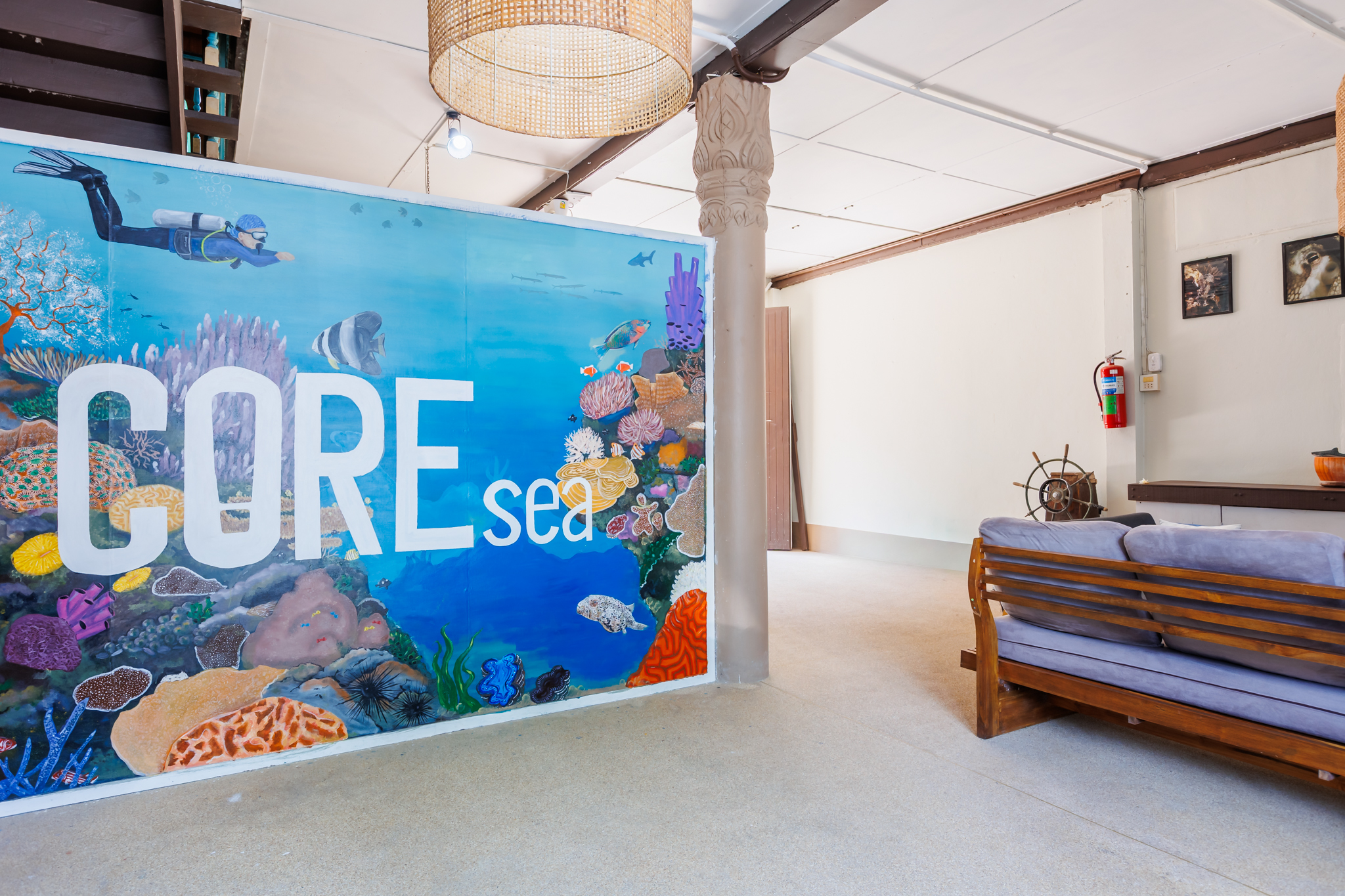
We are situated in a small fishing village, in a classic Chinese-Thai townhouse, which has seen most of the development on Koh Phangan. It’s been beautifully restored in 2011, and is surprisingly functional and cozy at the same time. Since the expansion in late 2011 our total area is now app. 200m2, with a spacious garden of another 300 m2. The Center contains one dry laboratory, one wet laboratory, a class room, workshop, shared bathrooms, equipment area, courtyard and a lounge. We have 5 guest rooms, which can accommodate 11 people.
We’re pretty close to ocean, it’s just across the road.
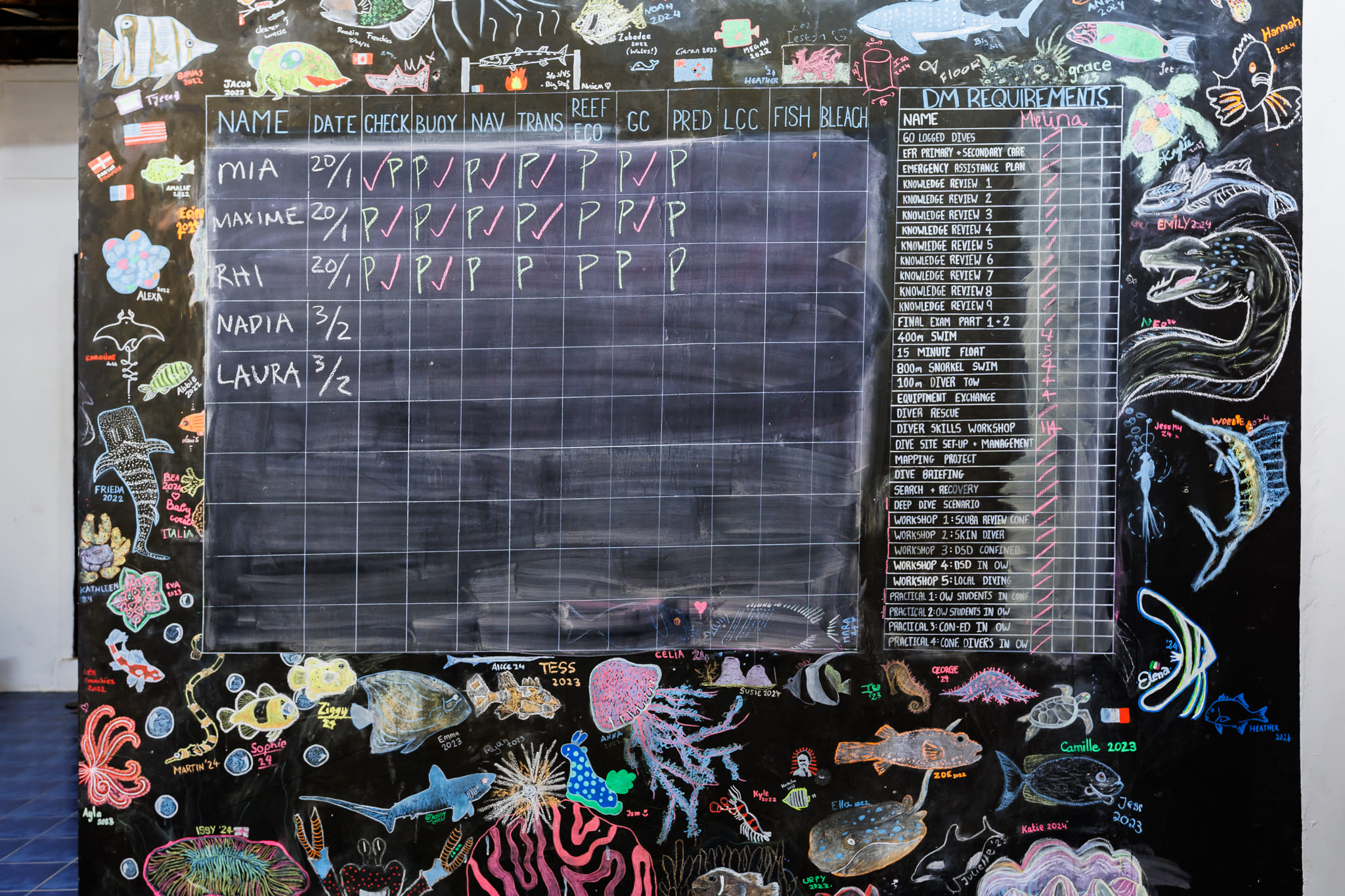
The official “you survived” board
Two Weeks. A Lot of Data. A Little Chaos.
This board tracks your training progress — from navigation and transects to fish surveys and bleaching assessments.
And when you leave?
You leave your mark on the wall — a small memento to prove you were here, you learned at least what a coral is, and you probably got sunburnt at least once.
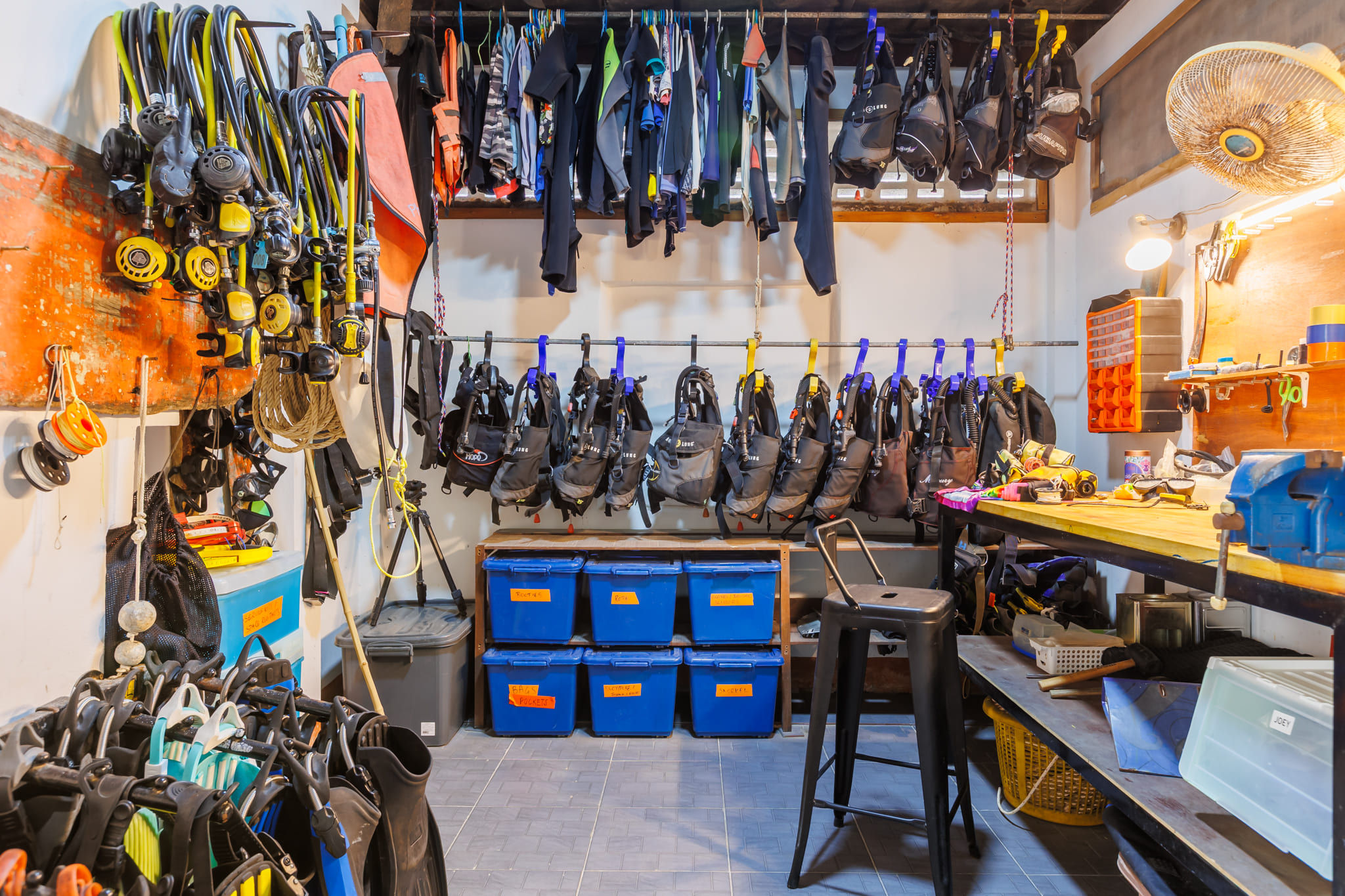
The workshop
Regulators get serviced.
BCD’s get patched.
Wetsuits get rescued from questionable decisions.
Fully stocked with tanks, tools, and enough spare parts to keep our research running smoothly — even when salt, sand and tropical humidity have other plans.
It’s not glamorous.
It’s essential.
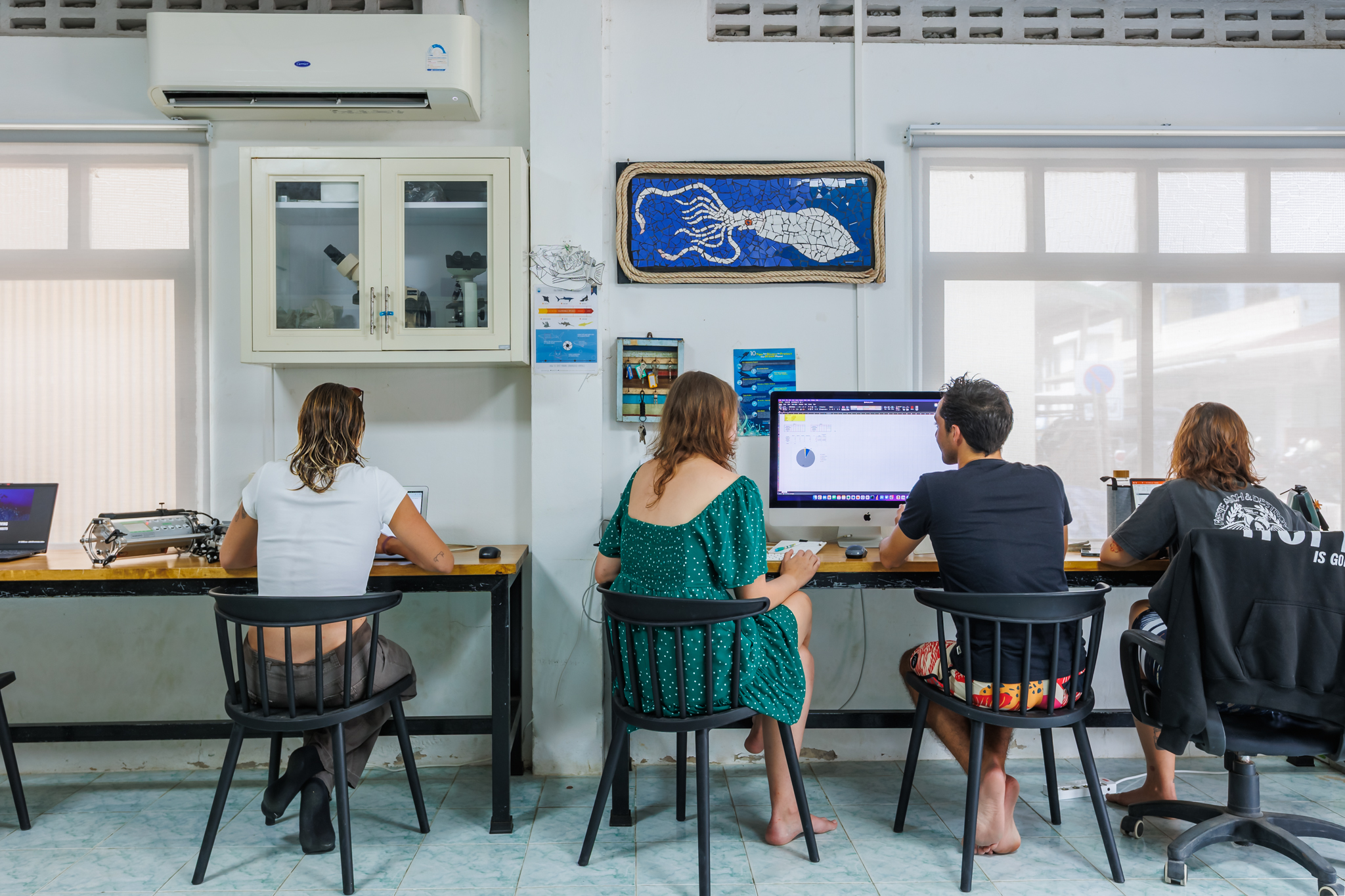
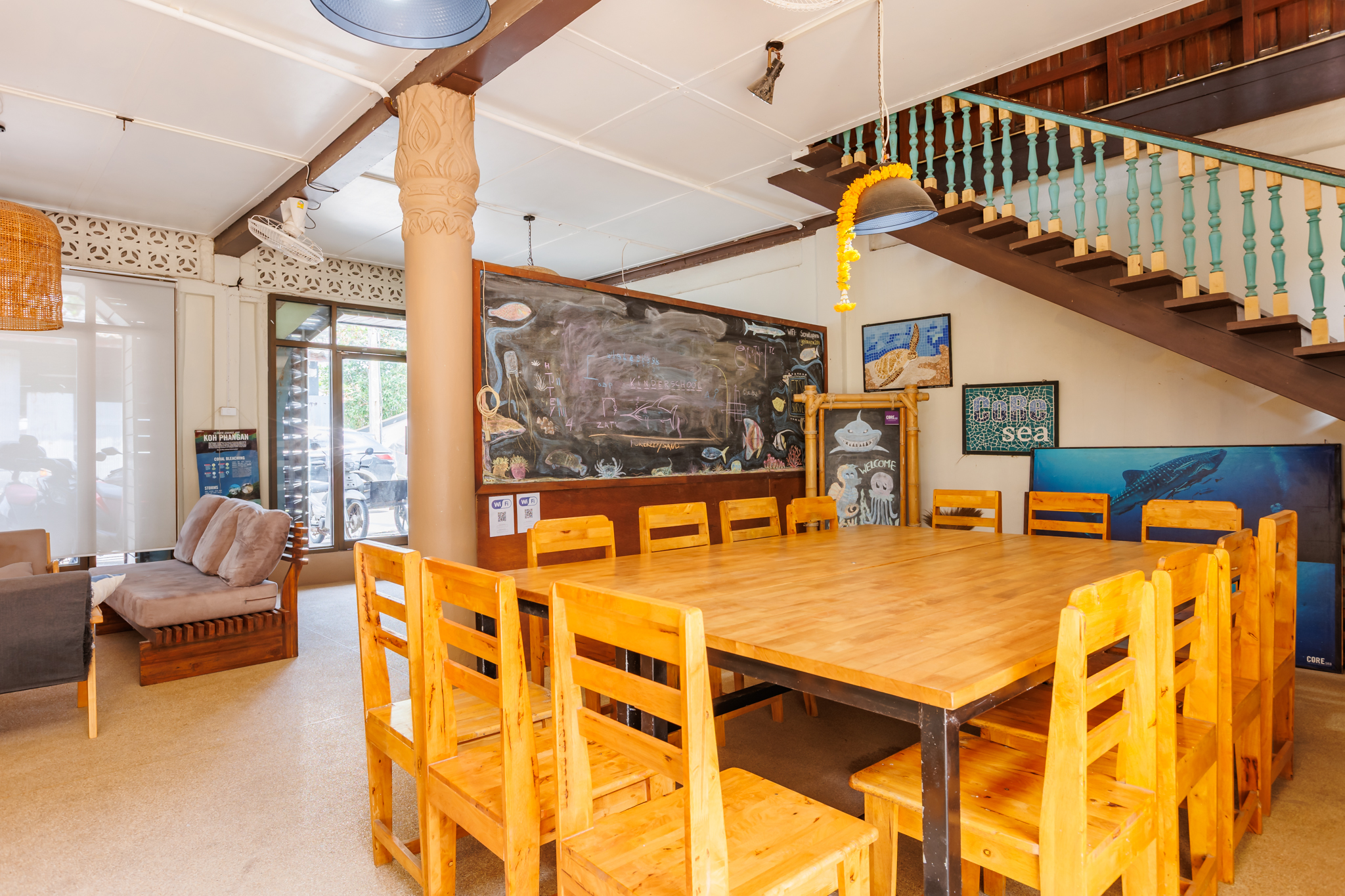
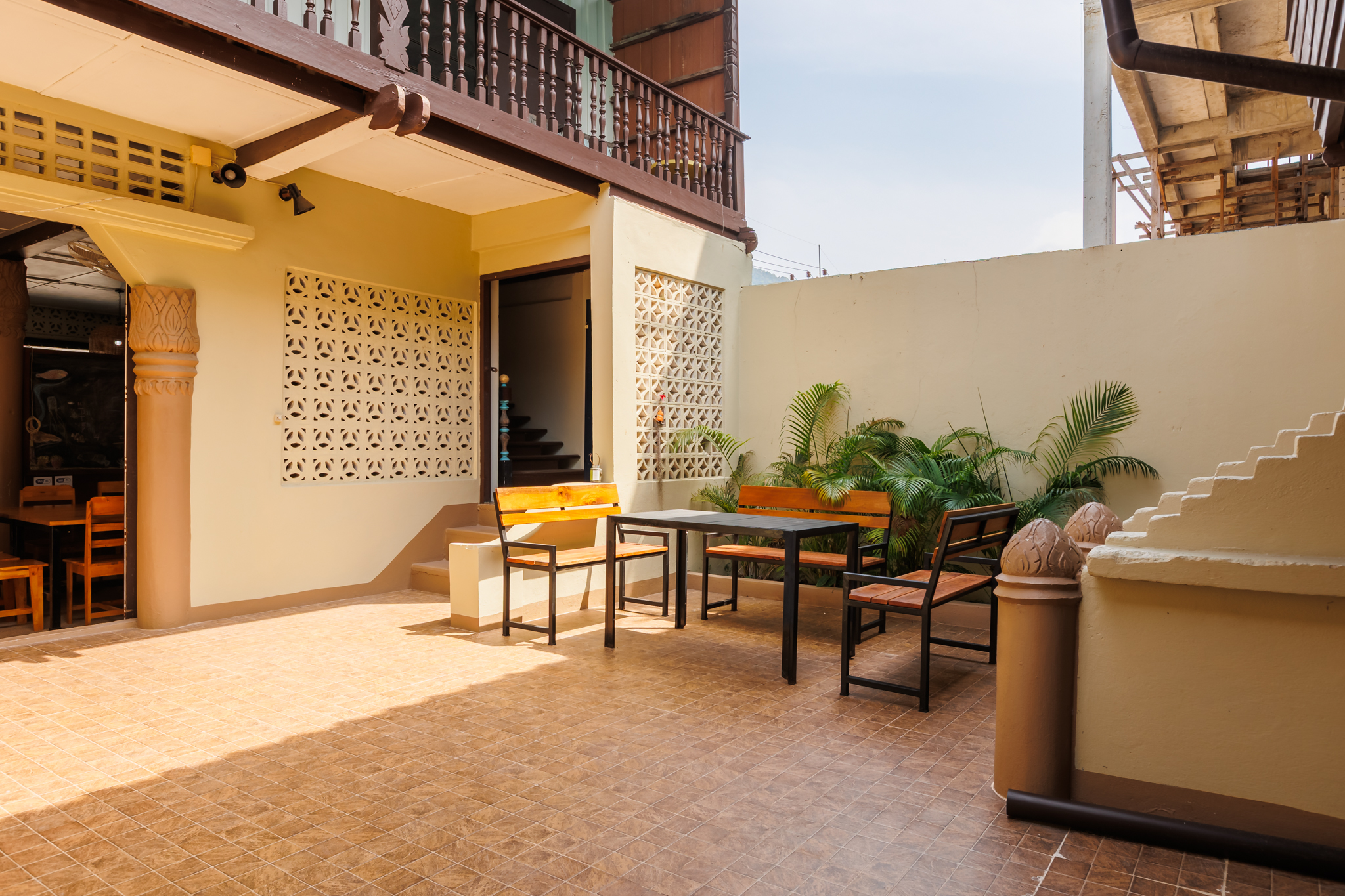
The lab. The classroom. The courtyard.
This is where briefings happen.
Sometimes planned.
Sometimes very not planned.
Our classroom and courtyard space is where data sheets get explained, species get debated, and research plans get refined before heading out to sea.
It’s where science is achieved — and where the occasional, entirely necessary, bit of tomfoolery keeps morale high during long field days.
Professional? Yes.
Serious about conservation? Absolutely.
Fun? Also yes.
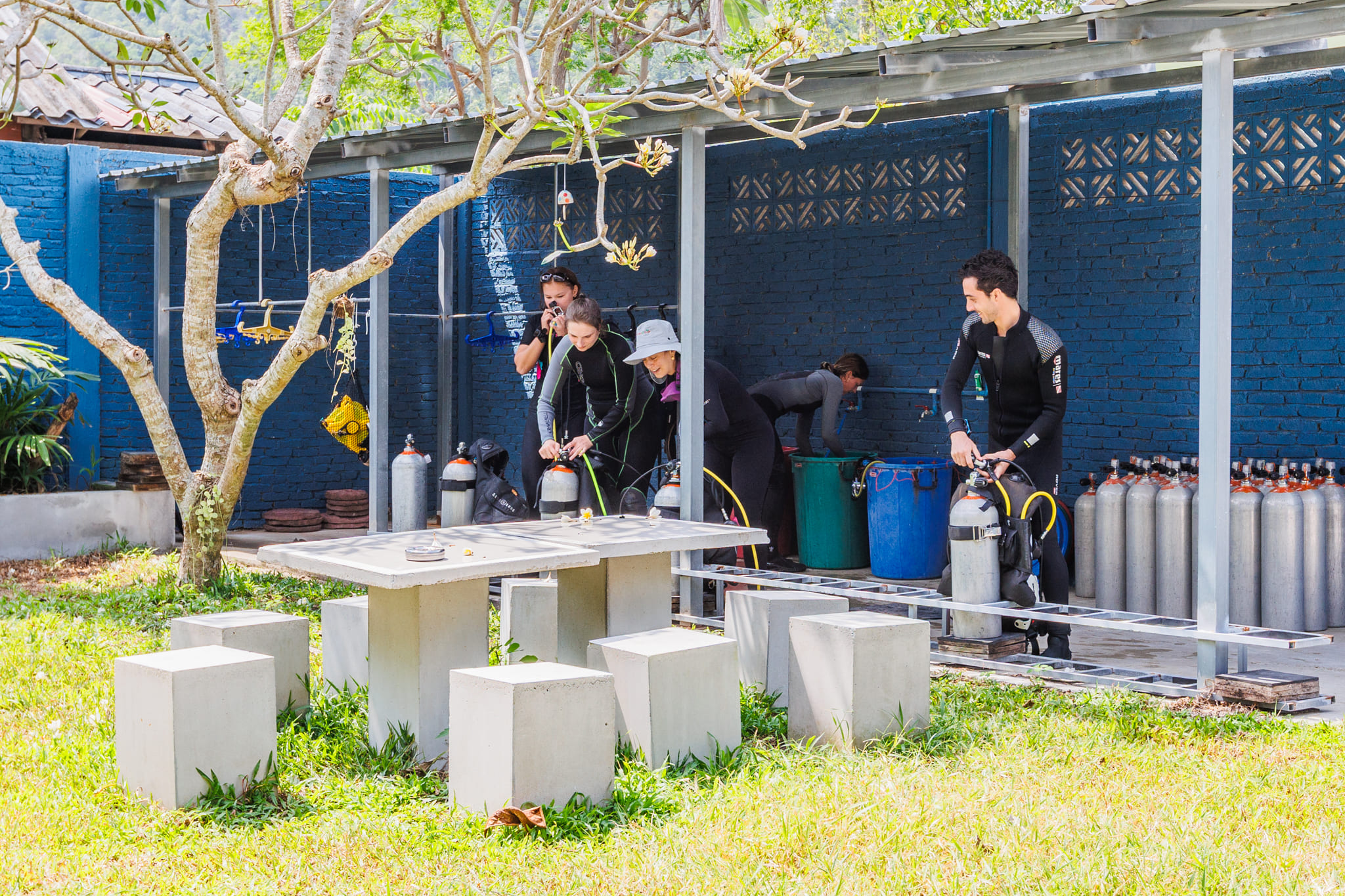
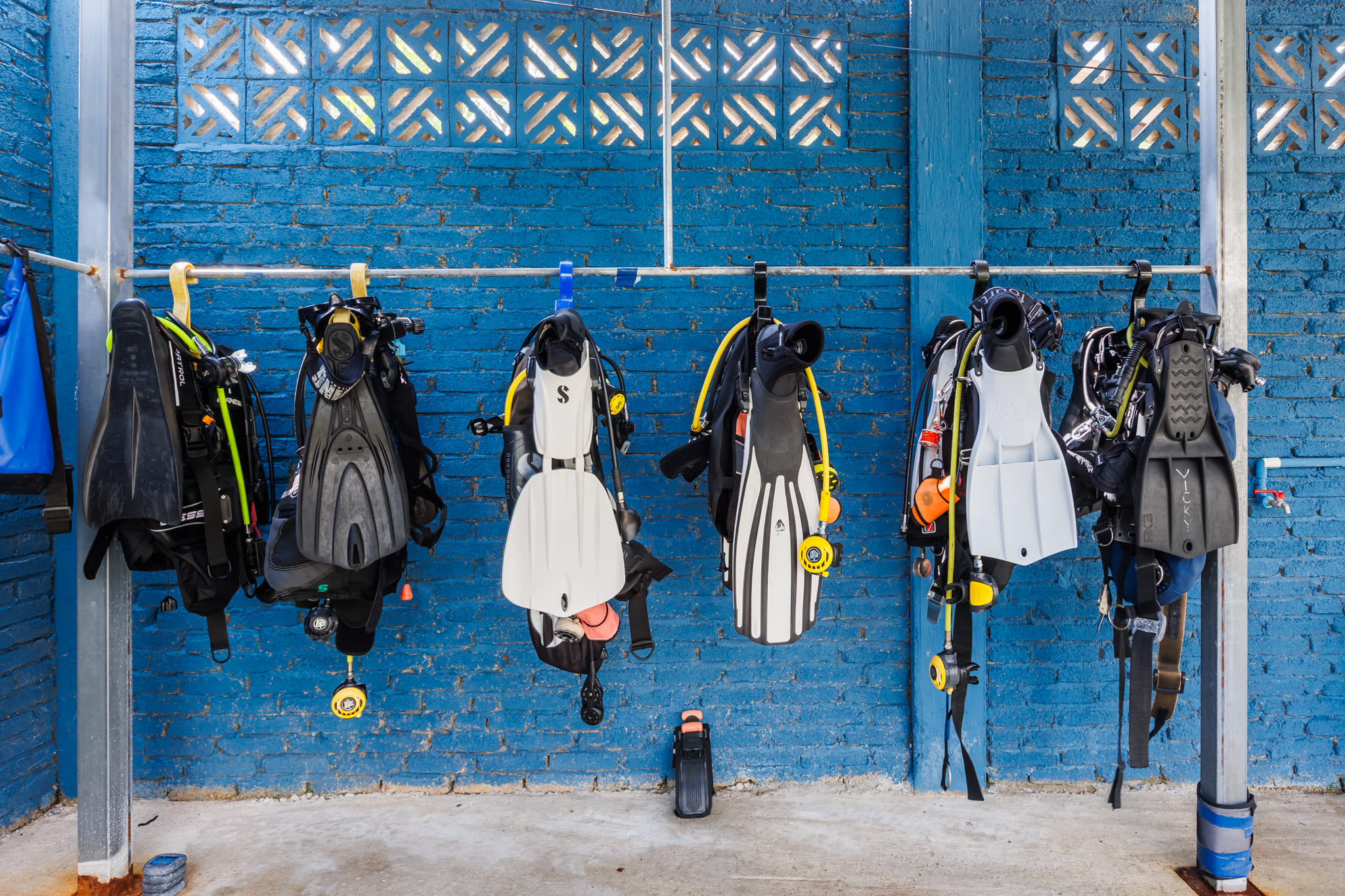
The backyard
Where equipment is set up, rinsed, dried and prepped for the next survey. It’s practical, organised, and usually buzzing with quiet efficiency before boat call.
And when the gear is sorted?
The garden becomes prime territory for the occasional sunbather.
Sometimes that’s a student recovering from a long dive.
Sometimes it’s a lizard who got there first.
Either way, the backyard does what it needs to do — keeps the operation moving, keeps the gear ready, and occasionally doubles as a tropical recharge zone.
Accommodation
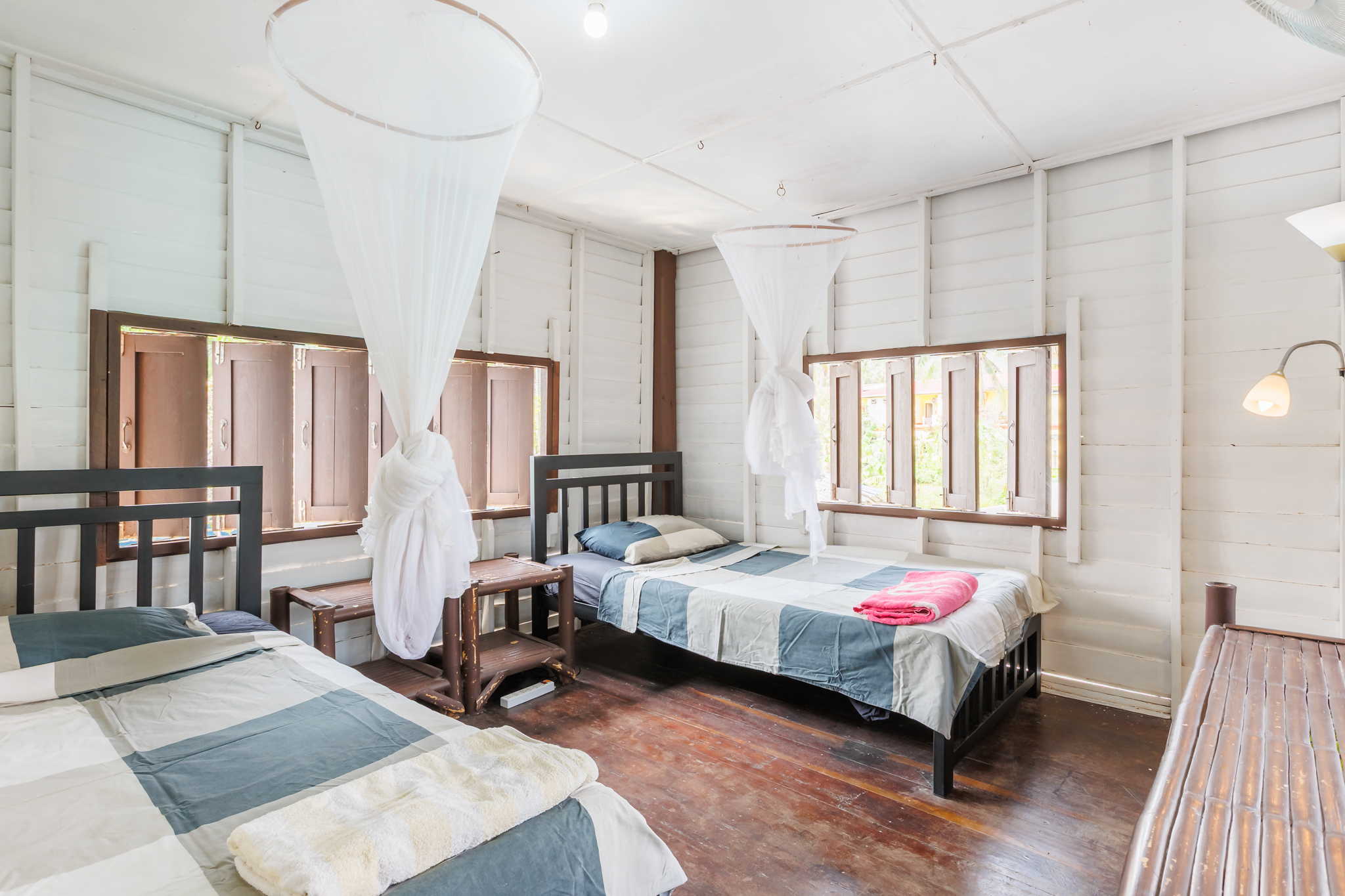
Our on-site accommodation is simple, clean and designed for people who spend more time underwater than indoors.
🛏 Shared Rooms
Rooms accommodate a maximum of three people, and we aim to keep rooms same sex wherever possible.
Think wooden floors, solid bunk beds, mosquito nets where needed, and enough shelf space for the growing collection of sunscreen, dive logs and field snacks you’ll inevitably accumulate.
It’s not luxury resort living — it’s practical, comfortable field-station living.
🌬 No Aircon. Yes, Your Own Fan.
We don’t have air conditioning.
We do, however, make sure every room is fitted with individual fans — so no one has to argue over who controls the temperature.
Your breeze, your rules.
🚿 Bathrooms
Shared bathroom facilities are clean, functional and regularly maintained.
Hot showers?
Sometimes.
Refreshing after a humid reef survey?
Always.
🍳 Kitchen
For those who like to cook for themselves — or need urgent hanger intervention after a long field day — our communal kitchen is ready.
Accommodation
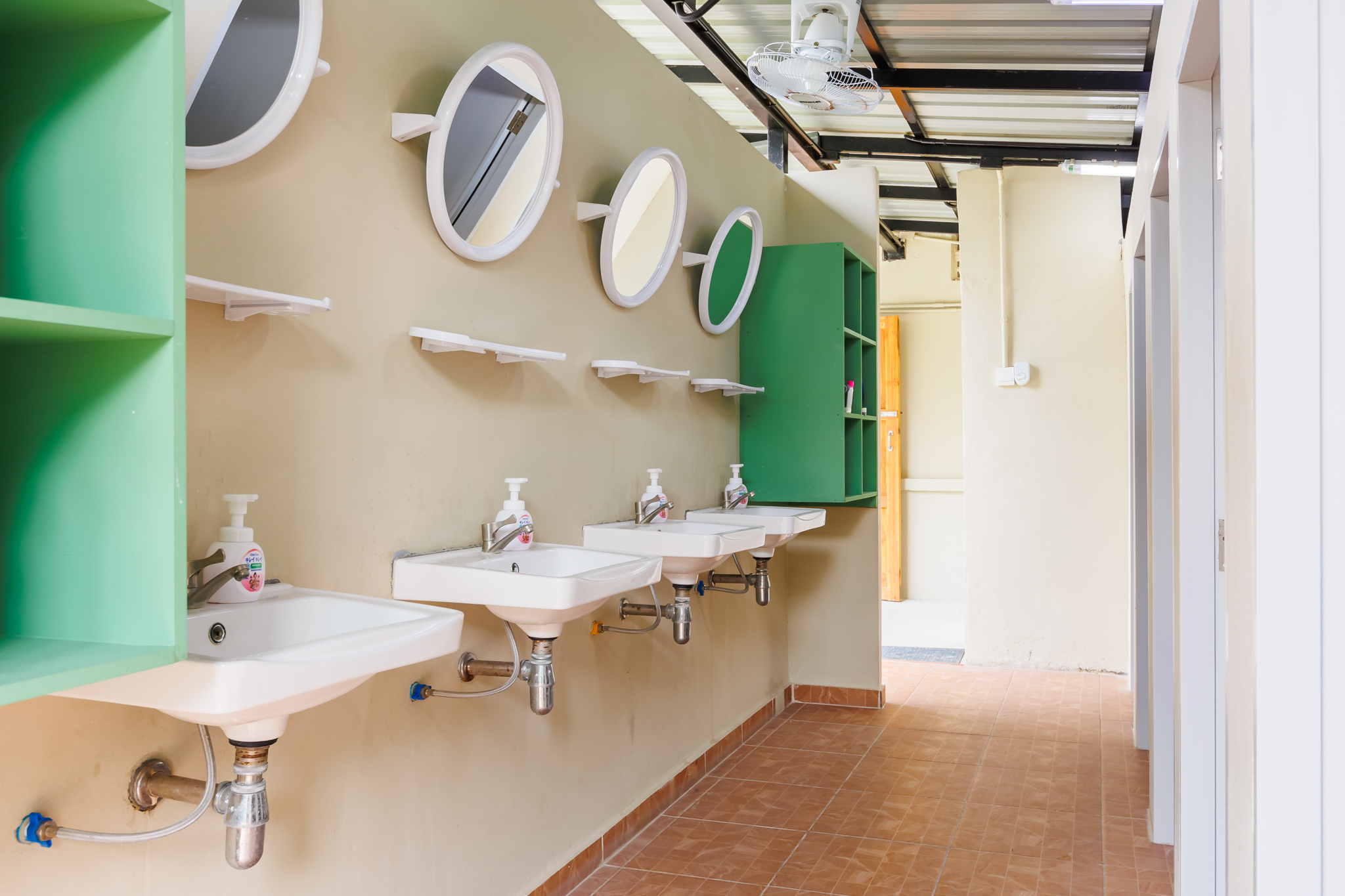
Our on-site accommodation is simple, clean and designed for people who spend more time underwater than indoors.
🛏 Shared Rooms
Rooms accommodate a maximum of three people, and we aim to keep rooms same sex wherever possible.
Think wooden floors, solid bunk beds, mosquito nets where needed, and enough shelf space for the growing collection of sunscreen, dive logs and field snacks you’ll inevitably accumulate.
It’s not luxury resort living — it’s practical, comfortable field-station living.
🌬 No Aircon. Yes, Your Own Fan.
We don’t have air conditioning.
We do, however, make sure every room is fitted with individual fans — so no one has to argue over who controls the temperature.
Your breeze, your rules.
🚿 Bathrooms
Shared bathroom facilities are clean, functional and regularly maintained.
Hot showers?
Sometimes.
Refreshing after a humid reef survey?
Always.
🍳 Kitchen
For those who like to cook for themselves — or need urgent hanger intervention after a long field day — our communal kitchen is ready.
Accommodation
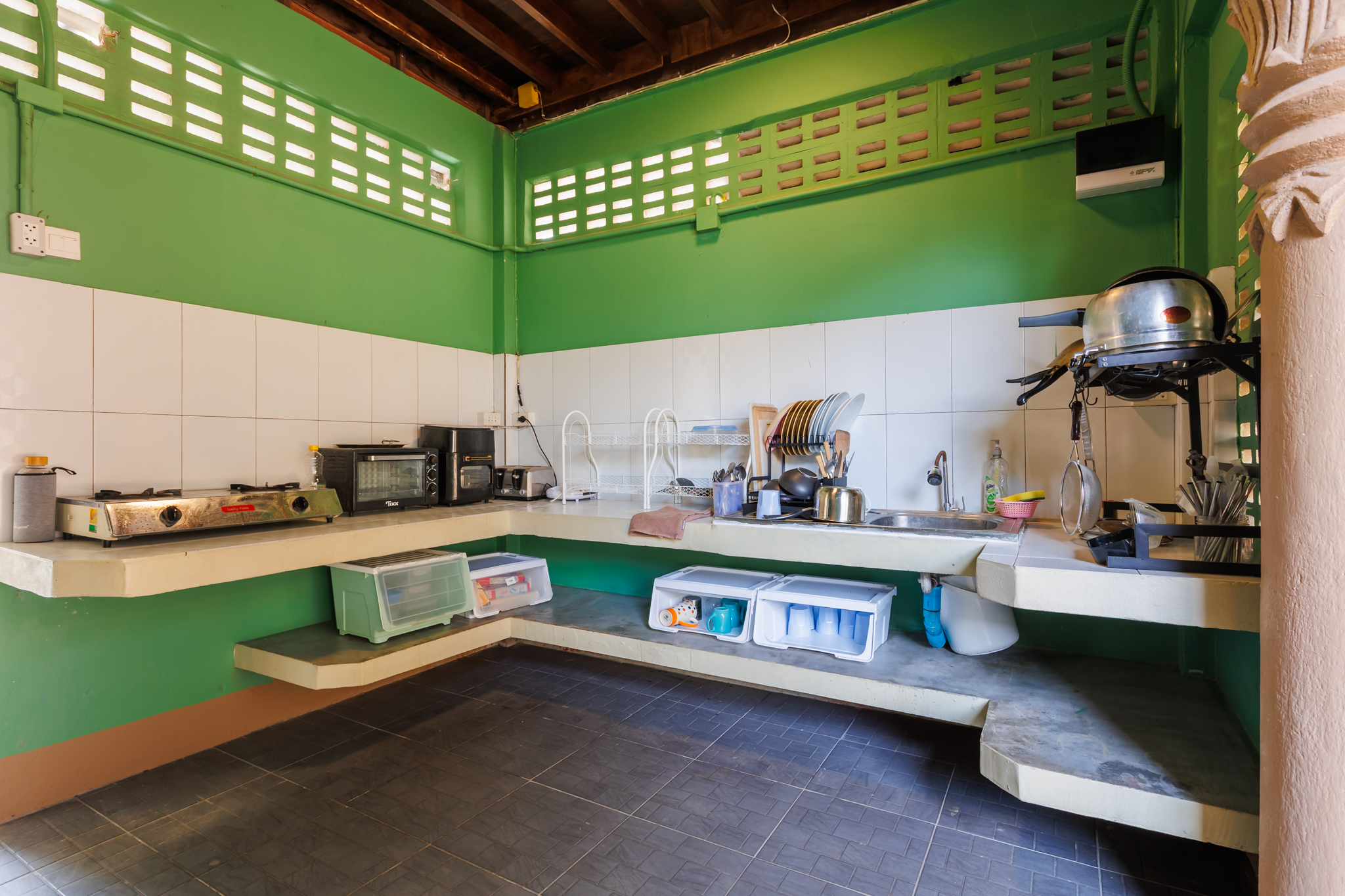
Our on-site accommodation is simple, clean and designed for people who spend more time underwater than indoors.
🛏 Shared Rooms
Rooms accommodate a maximum of three people, and we aim to keep rooms same sex wherever possible.
Think wooden floors, solid bunk beds, mosquito nets where needed, and enough shelf space for the growing collection of sunscreen, dive logs and field snacks you’ll inevitably accumulate.
It’s not luxury resort living — it’s practical, comfortable field-station living.
🌬 No Aircon. Yes, Your Own Fan.
We don’t have air conditioning.
We do, however, make sure every room is fitted with individual fans — so no one has to argue over who controls the temperature.
Your breeze, your rules.
🚿 Bathrooms
Shared bathroom facilities are clean, functional and regularly maintained.
Hot showers?
Sometimes.
Refreshing after a humid reef survey?
Always.
🍳 Kitchen
For those who like to cook for themselves — or need urgent hanger intervention after a long field day — our communal kitchen is ready.
Accommodation
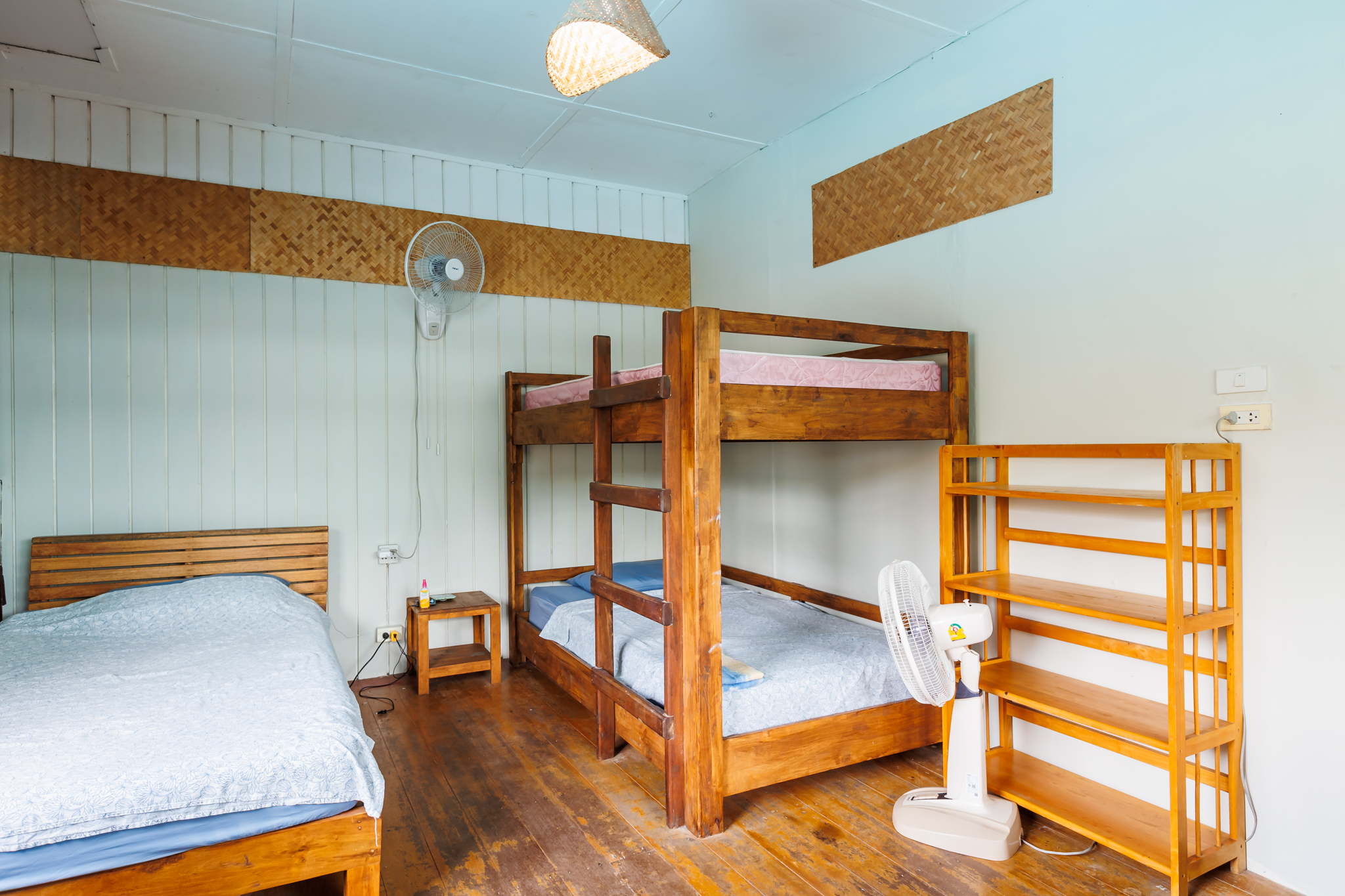
Our on-site accommodation is simple, clean and designed for people who spend more time underwater than indoors.
🛏 Shared Rooms
Rooms accommodate a maximum of three people, and we aim to keep rooms same sex wherever possible.
Think wooden floors, solid bunk beds, mosquito nets where needed, and enough shelf space for the growing collection of sunscreen, dive logs and field snacks you’ll inevitably accumulate.
It’s not luxury resort living — it’s practical, comfortable field-station living.
🌬 No Aircon. Yes, Your Own Fan.
We don’t have air conditioning.
We do, however, make sure every room is fitted with individual fans — so no one has to argue over who controls the temperature.
Your breeze, your rules.
🚿 Bathrooms
Shared bathroom facilities are clean, functional and regularly maintained.
Hot showers?
Sometimes.
Refreshing after a humid reef survey?
Always.
🍳 Kitchen
For those who like to cook for themselves — or need urgent hanger intervention after a long field day — our communal kitchen is ready.
Accommodation
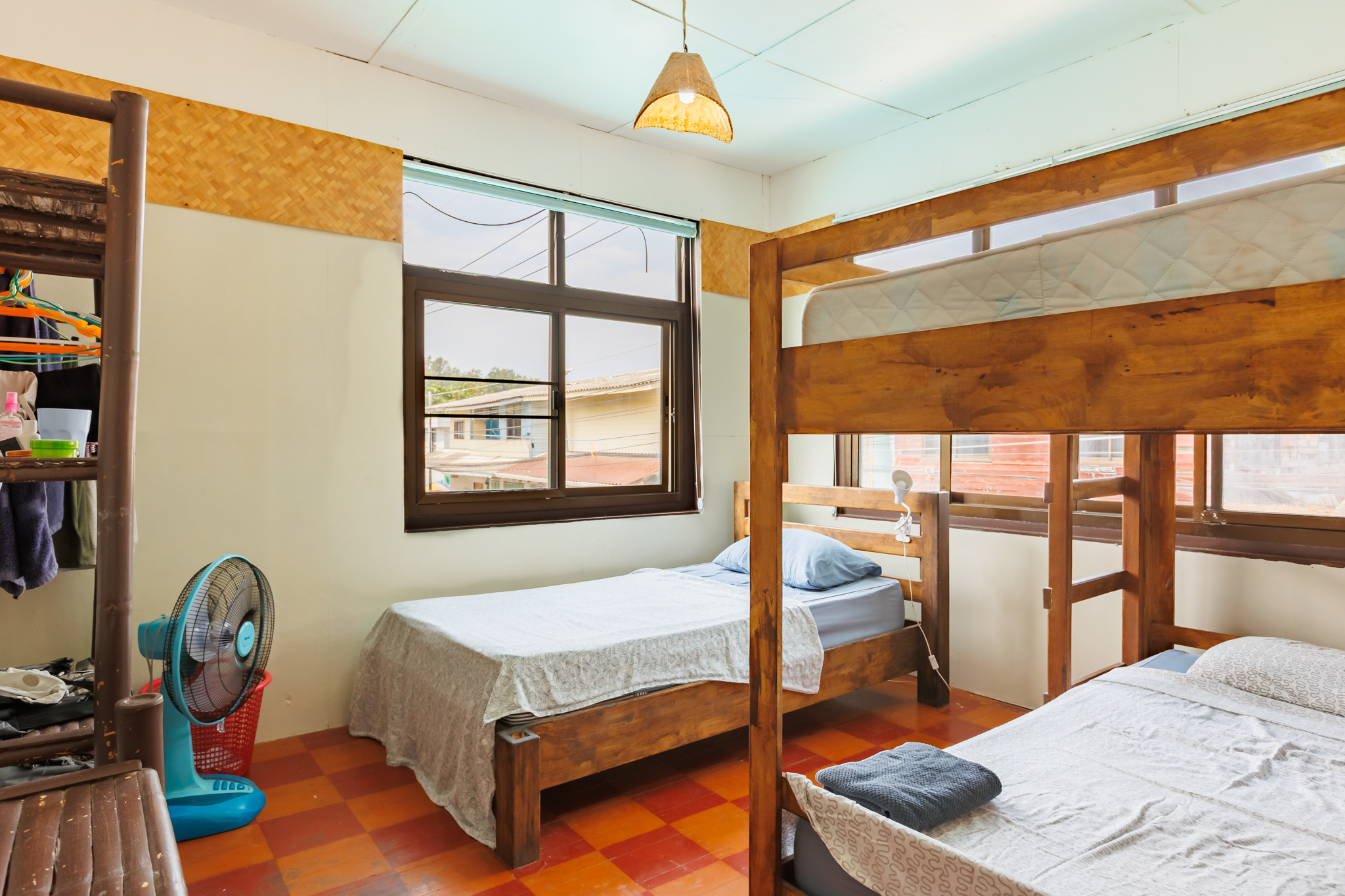
Our on-site accommodation is simple, clean and designed for people who spend more time underwater than indoors.
🛏 Shared Rooms
Rooms accommodate a maximum of three people, and we aim to keep rooms same sex wherever possible.
Think wooden floors, solid bunk beds, mosquito nets where needed, and enough shelf space for the growing collection of sunscreen, dive logs and field snacks you’ll inevitably accumulate.
It’s not luxury resort living — it’s practical, comfortable field-station living.
🌬 No Aircon. Yes, Your Own Fan.
We don’t have air conditioning.
We do, however, make sure every room is fitted with individual fans — so no one has to argue over who controls the temperature.
Your breeze, your rules.
🚿 Bathrooms
Shared bathroom facilities are clean, functional and regularly maintained.
Hot showers?
Sometimes.
Refreshing after a humid reef survey?
Always.
🍳 Kitchen
For those who like to cook for themselves — or need urgent hanger intervention after a long field day — our communal kitchen is ready.
Accommodation
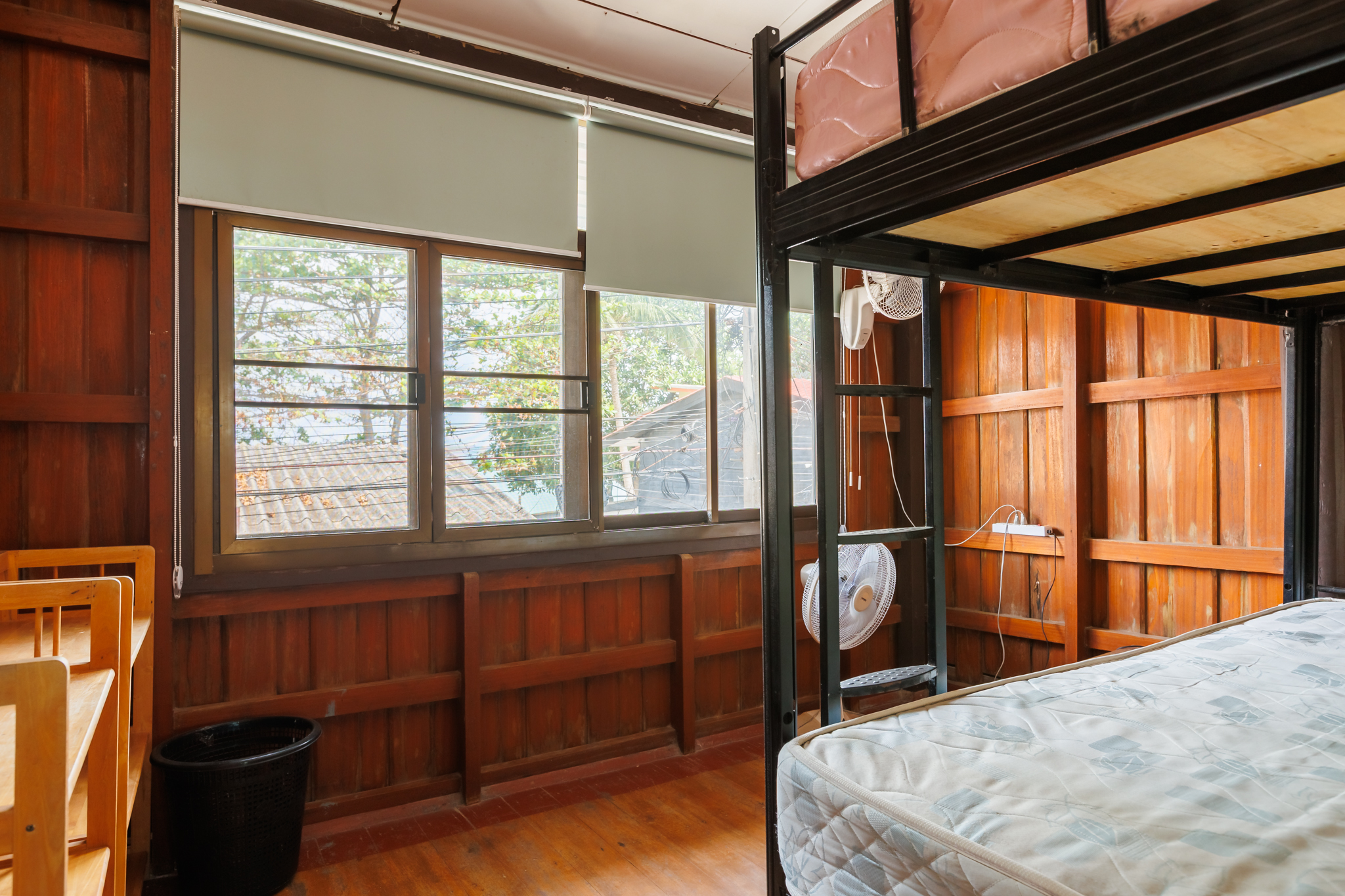
Our on-site accommodation is simple, clean and designed for people who spend more time underwater than indoors.
🛏 Shared Rooms
Rooms accommodate a maximum of three people, and we aim to keep rooms same sex wherever possible.
Think wooden floors, solid bunk beds, mosquito nets where needed, and enough shelf space for the growing collection of sunscreen, dive logs and field snacks you’ll inevitably accumulate.
It’s not luxury resort living — it’s practical, comfortable field-station living.
🌬 No Aircon. Yes, Your Own Fan.
We don’t have air conditioning.
We do, however, make sure every room is fitted with individual fans — so no one has to argue over who controls the temperature.
Your breeze, your rules.
🚿 Bathrooms
Shared bathroom facilities are clean, functional and regularly maintained.
Hot showers?
Sometimes.
Refreshing after a humid reef survey?
Always.
🍳 Kitchen
For those who like to cook for themselves — or need urgent hanger intervention after a long field day — our communal kitchen is ready.
Accommodation
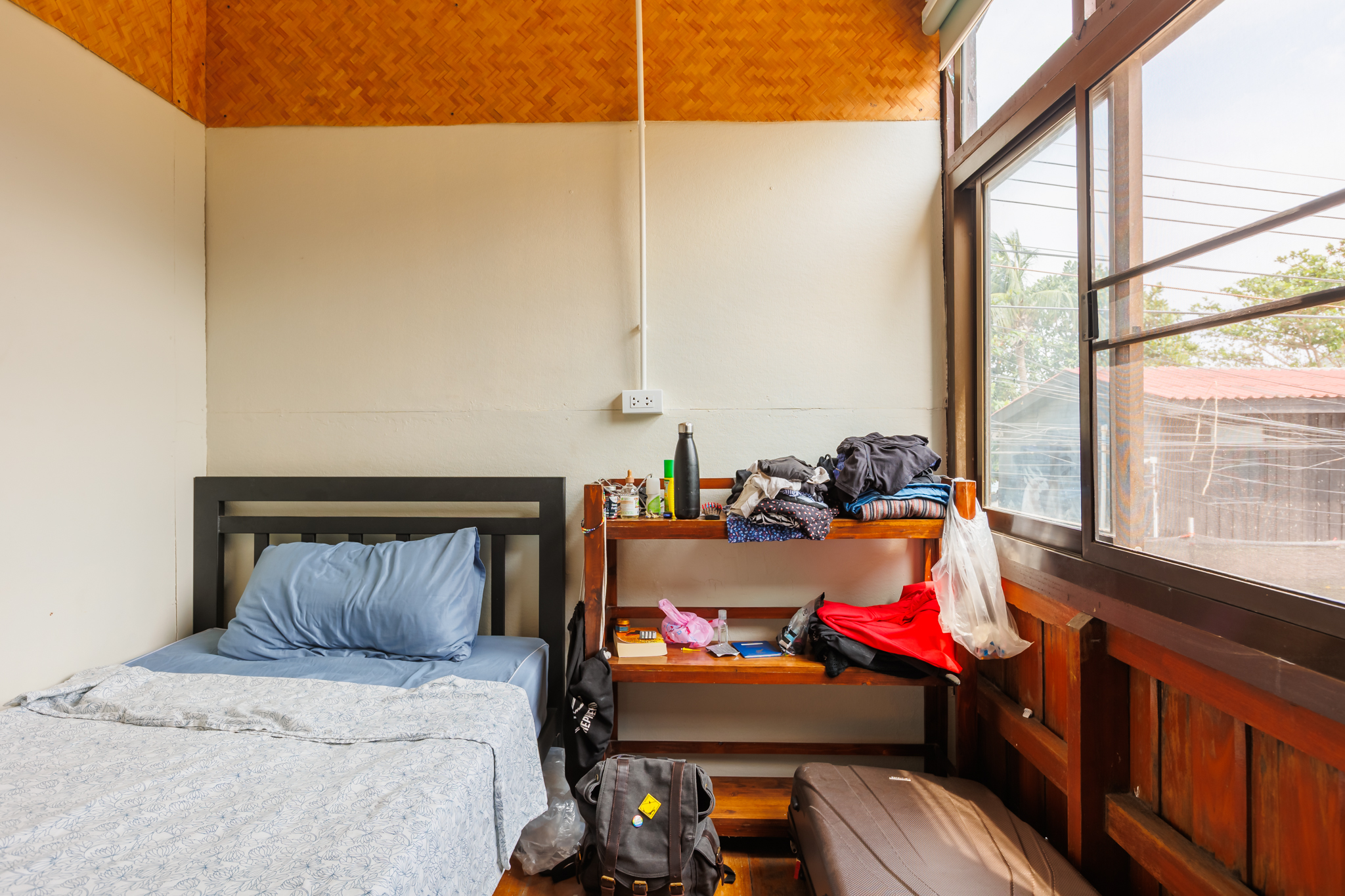
Our on-site accommodation is simple, clean and designed for people who spend more time underwater than indoors.
🛏 Shared Rooms
Rooms accommodate a maximum of three people, and we aim to keep rooms same sex wherever possible.
Think wooden floors, solid bunk beds, mosquito nets where needed, and enough shelf space for the growing collection of sunscreen, dive logs and field snacks you’ll inevitably accumulate.
It’s not luxury resort living — it’s practical, comfortable field-station living.
🌬 No Aircon. Yes, Your Own Fan.
We don’t have air conditioning.
We do, however, make sure every room is fitted with individual fans — so no one has to argue over who controls the temperature.
Your breeze, your rules.
🚿 Bathrooms
Shared bathroom facilities are clean, functional and regularly maintained.
Hot showers?
Sometimes.
Refreshing after a humid reef survey?
Always.
🍳 Kitchen
For those who like to cook for themselves — or need urgent hanger intervention after a long field day — our communal kitchen is ready.